the playground for all the different races


 (all black and white pictures from the national archives of s'pore)
that stretch of fields bounded by balestier, tessensohn and moulmein roads known as the balestier plain used to house sports clubs representing the three major races in singapore. there were the malay football association, the indian association and the s'pore chinese recreation club. today, the malay football association - which i remember was housed in a two-storey yellow building - is no longer around. it had to make way for development - part of the central expressway.


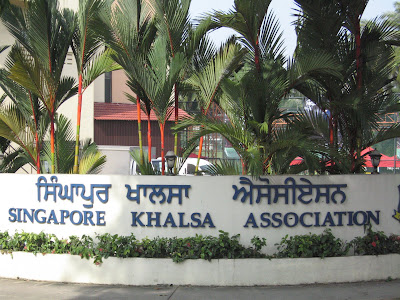

there are other clubs like the ceylon sports club and the kamala club found within the same field. the s'pore khalsa association is located just at the edge of the plain, at tessensohn road.


i remember the malay football association building because it was close to the bus terminal at moulmein green. today, the central expressway stands over the space that it once occupied.


the s'pore chinese recreation club started off as the straits chinese recreational club and it was at hong lim park. when ymca vacated its place at balestier plain, the s'pore chinese recreation club took over the premises.
balestier plain has been designated a historic site since 2002. it is an acknowledgment of its significance as a recreational arena that has encouraged sporting activities and achievements of members of the club in its vicinity.
i remember mostly the hockey and cricket matches that were played on these grounds.
balestier plain used to be a sugar-cane plantation in the 19th century. the person who gave balestier road its name, joseph balestier, owned a 1000-acre plantation at this site. he eventually sold the business when the industry failed and his wife died.
there is
a write-up here about the first paying passenger to singapore whose plane landed at balestier plain.
the following information comes from a national heritage board plaque placed near to the ceylon sports club along balestier road:
balestier road, from which balestier plain got its name, was named after joseph balestier, a keen botanist and agriculturist who arrived in singapore in 1834. he was appointed as the first us consul in singapore in 1836 by the then president of the usa, andrew jackson.balestier plain and race course plain were vast spaces in the early 1900s. buffalo road, race course road, balestier road and moulmein road enclosed the whole plain. today, balestier plain (the plain) refers to the playing fields bounded by balestier road and tessensohn road to moulmein road. eight sports clubs in its vicinty have been associated with the plain - the ceylon sports club (csc), the ceylon tamils' association (cta), the s'pore indian association (ia), the young men's christian association (ymca), the s'pore chinese recreation club (scrc), the s'pore khalsa association (ska), the s'pore malay football club (mfc) and kamala club, collectively known as the balestier plain clubs.the ceylon sports club and s'pore indian association occupied their present sites at balestier plain in 1922, followed by ymca (1947) and later, the ska (1968). when ymca vacated its site in 1963, it was taken over by scrc. other clubs once located at the plain were the s'pore malay football club (founded 1910), the ceylon tamils' association (founded 1922)and the ladies' union (founded 1932/33) which was replaced and run by the kamala club in the early 1950s. the mfc and kamala club were in the area until 1983.various sportspersons from these clubs have represented s'pore on state teams in the olympics and other major sporting events. several players from csc and ia represented s'pore in hockey at the 1956 melbourne olympics.the british destroyed the clubhouse on 14 feb 1942 as a defensive measure - a day before s'pore fell to the japanese. the plain was used as a dumping ground for the spoils of war and temporary storage for japanese military equipment during the japanese occupation. except for this period, the plain has always been the venue of sporting activities like cricket, hockey, netball, tennis, soccer, badminton, athletics and indoor games such as billiards and darts.
india's first prime minister jawaharlal nehru at the balestier plain
the plain also witnessed the laying of the foundation stone of ia on 17 june 1950 by pandit jawaharlal nehru, the first prime minister of india. csc was rebuilt with the aid of contributions mainly by the ceylonese community and well wishers witht he support of mr m saravanamuthu, the first ceylon high commissioner to s'pore. on 13 oct 1951, csc's foundation stone was laid by the rt. honourable mr d s senanayake, the first prime minister of ceylon. upon completion, the building was officially opened by the rt. honourable mr malcolm macdonald, governor-geneal for the united kingdom in south-east asia on 13 apr 1954.
balestier plain has evolved over time into a green lung and recreational zone. it stands not only as a testament to the sporting achievements of members of the clubs in the vicinity, but also as an icon for all s'poreans to appreciate the pioneering spirit of the early migrants to s'pore who had the vision and the drive to build social cum sports clubs in their new homeland.

 or this ....
 or this...
 or this...


 or this...
  or this...


